
The Historic Homes Recast As Luxury Hotels
The homes of some of the 20th century’s most influential and fascinating figures have been reimagined as hotels, offering guests a tantalising glimpse of how their former owners lived.
Jamaica, September just gone. Heavy humidity coats ice-cold martini glasses in a thick layer of condensation as a man with white hair and a warm smile addresses a small group gathered at GoldenEye. It’s an unofficial James Bond fan retreat, and David Zaritsky, a Philadelphian marketing executive who’s channelled his passion for all things 007 into an 82,000-subscriber-strong YouTube channel, knows how powerful this place can be. “This is where [James Bond author Ian] Fleming created everything that has brought us together,” he says. “It’s OK to get emotional, trust me.” “The one thing I would ask,” he adds, “because I know all of you, I get you, is you’re going to want to run straight to his desk. But we have plenty of time, so enjoy yourselves.”
As attendees enter the villa — a breezy, low-slung stone bungalow almost overhanging the ocean and enveloped on three sides by verdure — they’re welcomed by the view of an exquisitely manicured lawn that gives way to a private white-sand beach visible through dark wood plantation shutters. But Zaritsky was right. It’s the desk — small and unassuming, tucked into the corner of the villa’s master bedroom — that immediately catches the attention of those present. Said to be the exact piece of furniture, positioned in the precise place where Fleming wrote all 14 of the original Bond novels, it is a piece of literary history soon to be the subject of many a staged photo, the sitter staring pensively out over the ocean as Fleming surely did as he dreamt up villainous lairs and leggy love interests. But this night is the exception rather than the rule. The desk — along with the villa’s bamboo king bed, private pool and dedicated staff including a butler, housekeeper and cook — are not props. The writer’s former residence remains a functioning retreat within the GoldenEye resort, regularly booked by guests for exclusive and unfettered access from about $11,750 per night (minimum three-night stay). Sting wrote “Every Breath You Take” on that very desk while holidaying at the GoldenEye Villa in 1982. For the purposes of this story, let’s imagine these words were penned there too.
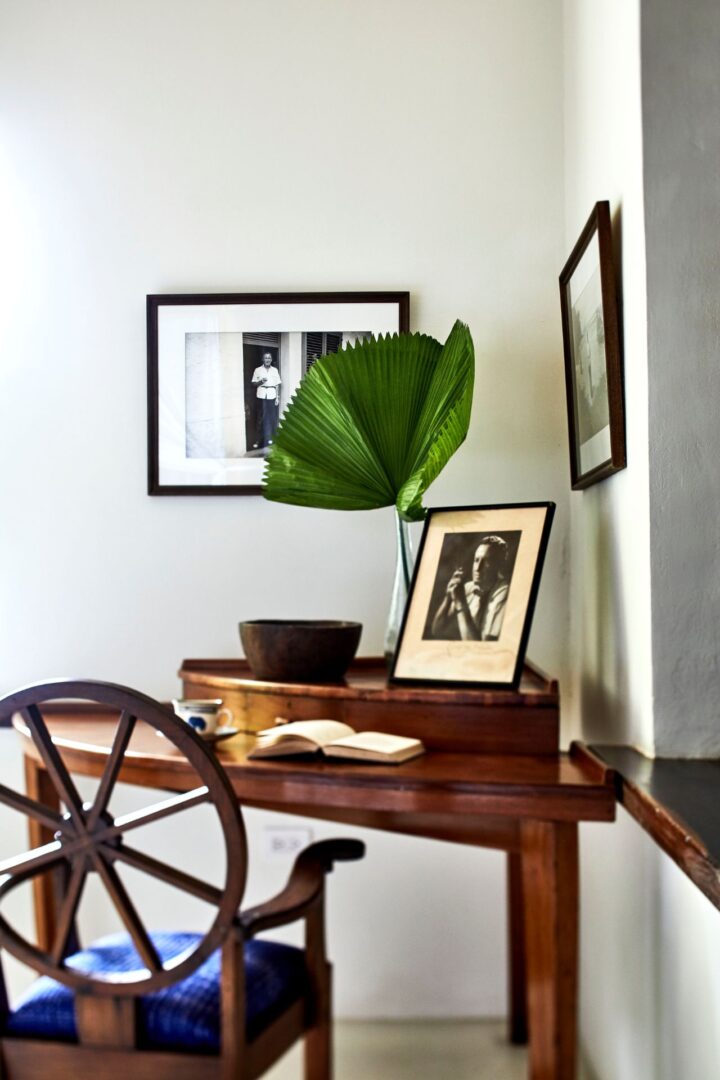
Ian Fleming’s beloved desk in GoldenEye Villa, the James Bond writer’s former Jamaican home, which is now available for holiday rentals, complete with staff. Image courtesy of GoldenEye.
The term “A-lister approved” has become a cliché in today’s travel lexicon, an often baseless blessing bestowed upon bars, restaurants and hotels by their marketing teams and lazy journalists to create the illusion of exclusivity — in much the same way that otherwise ordinary New York City diners and delis do by lining their walls with signed portraits of celebrities we’re led to believe are regular patrons. But a small and steadily growing number of hotels can truly live up to this claim, offering guests not just the chance to spend the night (or, ideally, a week) in a former home of a famous and powerful figure, but the chance to experience the property with the same intimacy and opulence it was designed to offer.
“Everything here is different from a normal hotel,” says Markus Odermatt, the general manager of Villa Feltrinelli since it opened in 2001, after the hotelier Robert Burns — the founder of Regent Hotels — bought the Italian property and restored it to its former greatness. Built in 1892 for the Feltrinelli family, one of the country’s richest and most influential dynasties, the peachy-pink palazzo set on Lake Garda near Gargnano later became Benito Mussolini’s residence during World War II. It was here that the ousted dictator proclaimed the creation of the so-called Italian Social Republic, a short-lived puppet state that lasted just 600 days, before his death in April 1945. After the war, it was handed back over to Giangiacomo, first heir to the Feltrinelli empire, who, as a publisher with a penchant for politics, used the property as his summer home and a place to pamper writers and intellectuals such as Tennessee Williams and Max Frisch.
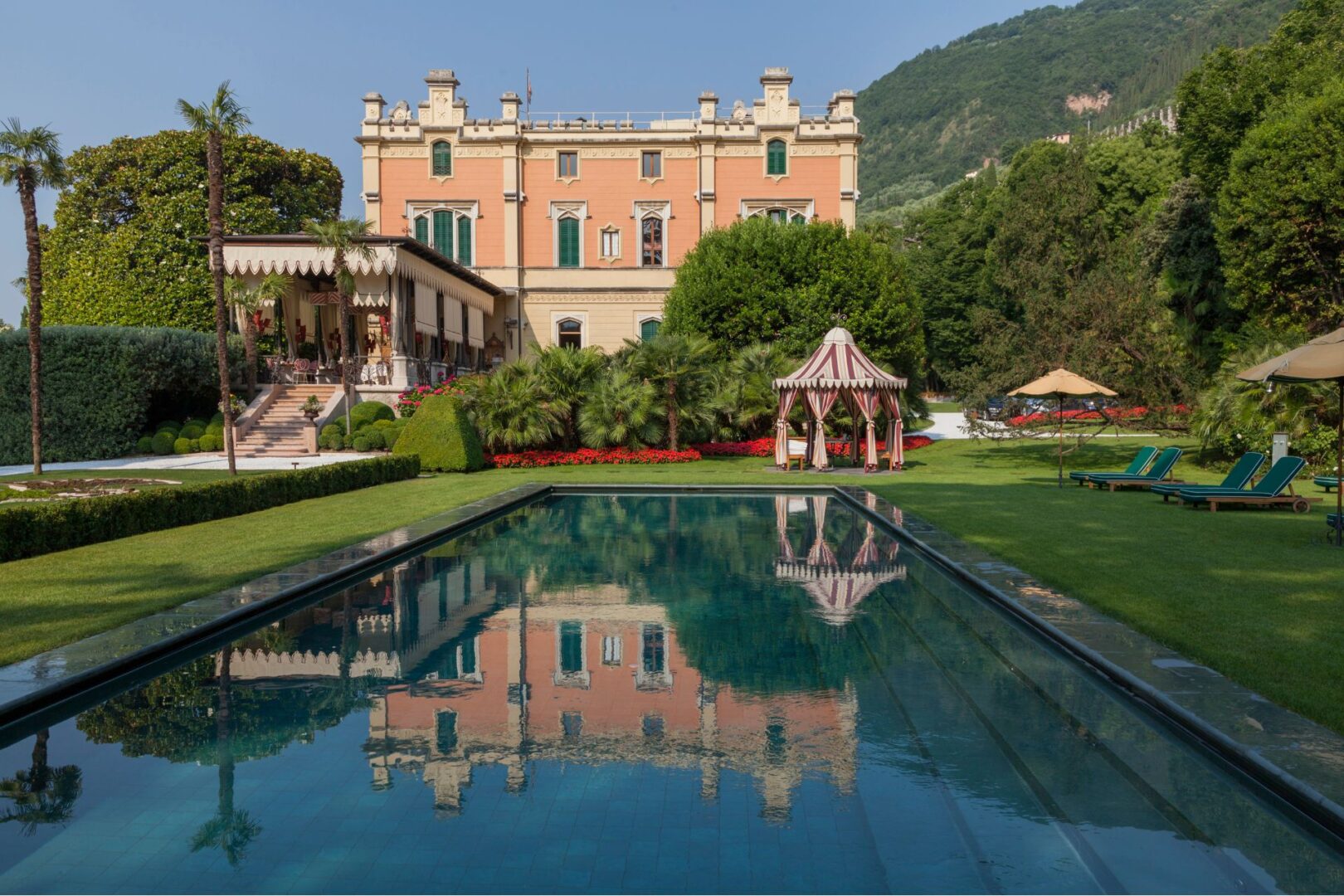
The pool at Villa Feltrinelli, which was built in 1892 for the Feltrinelli family. Image courtesy of Villa Feltrinelli.
Today, the turreted neo-Gothic villa remains unbranded and so discreet that arriving at its wrought-iron gates elicits a flicker of trepidation as one presses the brass buzzer. “When the gate opens, you dive into a world which has really disappeared,” says Odermatt, describing the experience of pulling into the gravel driveway, past ancient oak trees and a pristine croquet court, where pairs of blond-wood mallets rest in a casual crisscross waiting for a game. A member of staff welcomes you with a small bouquet of flowers, picked fresh from the gardens and fastened with a piece of ribbon, while a flurry of men in immaculate white polos whisk away your luggage to one of just 20 rooms, where your belongings will be deftly unpacked. “It turns a little bit into feeling like it’s your own house,” says Odermatt, noting that this philosophy shapes the hotel’s entire approach to service. “In most hotels, you have to follow certain rules in order for the hotel to work. Here, we have 100 staff members for only 20 rooms, which means guests can have breakfast whenever they want. They might wake late and take it on the far side of the property, near the lake. Everything is at your own pace.”
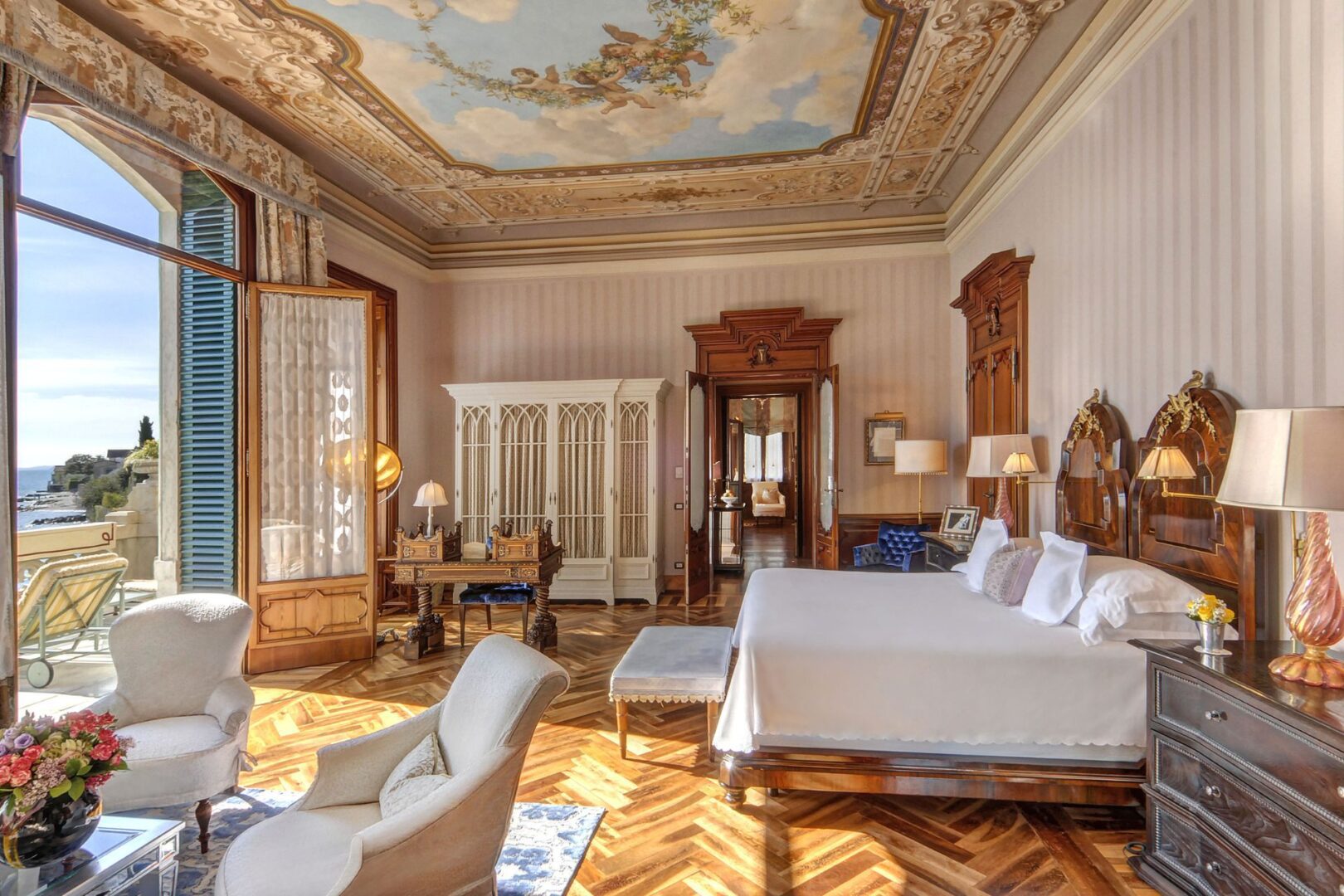
Image courtesy of Villa Feltrinelli. Feltrinelli’s suites have views over Lake Garda.
This flexible approach is designed to preserve a sense of serenity that transcends the transactional, and defines stays in such landmark former private homes. When the British fashion designer turned hotelier Jasper Conran opened the doors of Villa Mabrouka in Morocco in June 2023, having happened across the 1940s Modernist mansion that was once the home of Yves Saint Laurent and Pierre Bergé while getting a tent made in Tangier, he did so with the intention of operating the hotel as “an impeccably run private house”. Conran says that he had to be vetted by the Fondation Pierre Bergé-Yves Saint Laurent before he was allowed to buy the property, which sits on a clifftop overlooking the sparkling Strait of Gibraltar, just steps from the bustling kasbah and medina of the White City. Luckily, the foundation’s president, Madison Cox — a landscape architect who had designed the gardens of the villa in the early ’90s and was a friend of the couple — is a regular at Conran’s other hotel, a restored 19th-century riad in Marrakech named L’Hôtel Marrakech, and offered an almost immediate endorsement. “He knew the cut of my jib, so to speak,” says Conran, who quickly set about recreating his vision of a Riviera hotel in the 1930s. “I mean, it’s strictly imaginary — I don’t know if hotels were like that or not,” he says. “But for me, in storytelling terms, you know, it lit the fuse.” Conran describes the resulting property as “a piece of theatre that happens every day” — the stage of which is the 12 suites, two swimming pools, three restaurants, a rooftop bar and a hammam, all wrapped in a luscious garden of banana palms, bougainvillea and citrus trees bursting from terracotta planters and spilling over the cliffside into the sea.
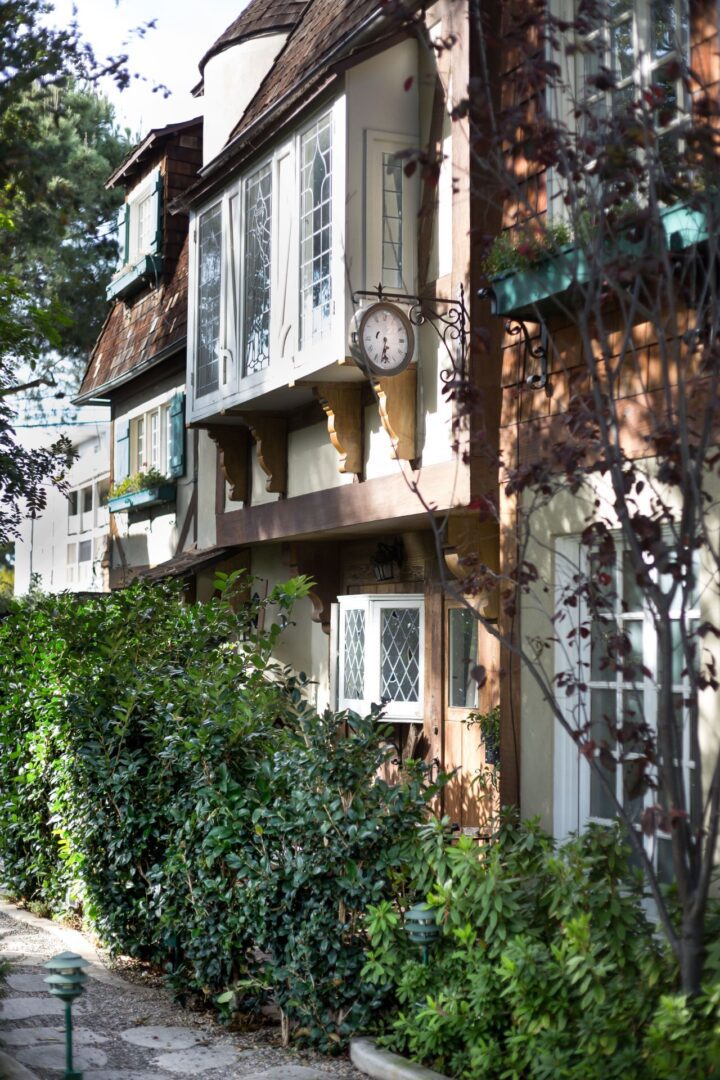
in Los Angeles, The Charlie’s faux-Tudor suites were originally developed by Charlie Chaplin. Image: Pixellab.
For Conran, designing the space involved a careful negotiation between past and present. He deliberately avoided leaning too hard on, or “milking”, what he calls “the Saint Laurent factor”, preferring to focus on the new spirit he has given the space. “We’ve done so much to the place and I’ve created another thing,” he says. But there was one element of the original property he never deigned to change: the iconic blue and green hues of the doors. “For me, it was absolutely Yves who put those colours together,” says Conran. “There’s no question of it. And to me, that’s the spirit of Yves, right centre in the place, and I wanted to keep the air of them there.”
Back at Villa Feltrinelli, with its frescoed ceilings, marble stairways, Murano glass chandeliers and stained-glass windows overlooking the lake, honouring the villa’s storied history also means ensuring that everything works flawlessly and never feels tired, worn or merely decorative. “It’s truly a labour of love,” Odermatt says. “Everything is custom-made. Every fabric, every piece of furniture is designed specifically for this villa. Things are refreshed regularly to keep the interiors crisp and vibrant. I am Swiss, so everything must be in perfect order and function as it should.” He takes particular pride in the fact that the villa’s giant marble bathtubs fill in under four minutes.
Contemplating “if these walls could talk” is undeniably a big part of the draw for those who stay in such places. At West Hollywood’s The Charlie (thecharliehotel.com), an unassuming collection of self-contained faux-Tudor cottages encircling an English rose garden, each of the 14 suites are named after a famous former guest (think Betty, Marilyn and Marlene). The villas were built in 1924 and redeveloped at the end of the decade by Charlie Chaplin as a pied-à-terre for himself and his favourite stars while they worked at his nearby studio on Sunset Boulevard and La Brea. Much of the lore surrounding the hotel is hard to verify, but the property emits such star wattage that it doesn’t really matter — the imagining is enough.
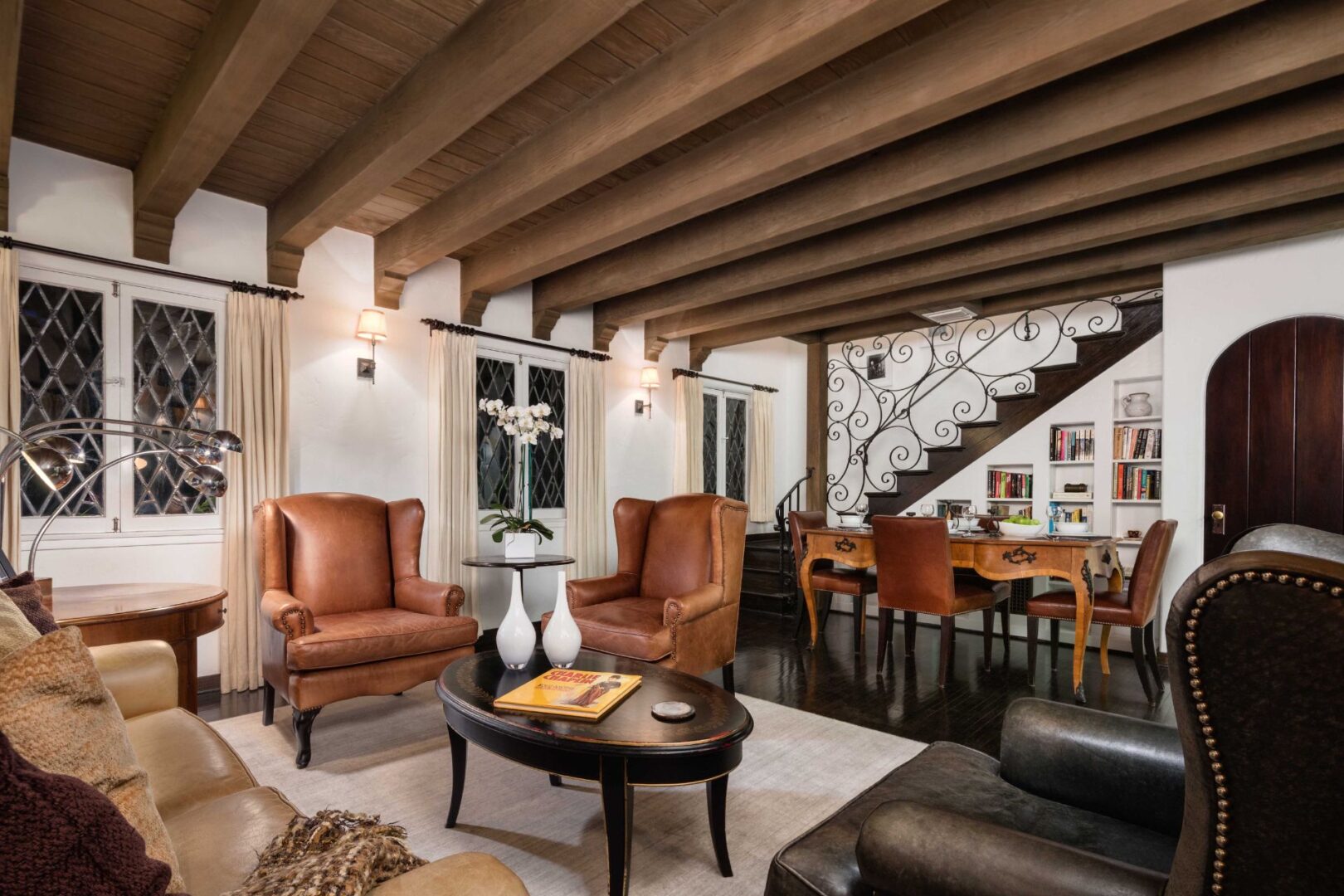
The Charlie’s faux-Tudor suites. Image: Pixellab.
On the other side of the world from Los Angeles, at Palacio Aguada, a mansion and grounds carved into the cliffs of India’s Konkan coast and concealed by the surrounding jungle, guests must apply for the privilege of staying (if you have to ask how much, you probably can’t afford it). This is the former party palace of Jimmy Gazdar, the reclusive Mumbai-based diamond tycoon who has been called the Gatsby of Goa. Gazdar hosted legendary New Year’s Eve celebrations attended by the wealthy and powerful, and it was at one such party at the turn of the millennium that the property’s current custodians, Pinky and Sanjay Reddy — one of India’s foremost power couples — fell in love with it. Since June this year they have offered Palacio Aguada as a private, full-estate experience for up to 20 guests, where butlers, bartenders, gardeners and chefs are on constant call to fulfil every desire, from meditation sessions in the ancient colonnaded pavilion to bespoke cocktails inspired by local flavours in the house’s private bar, the Eagle Room.
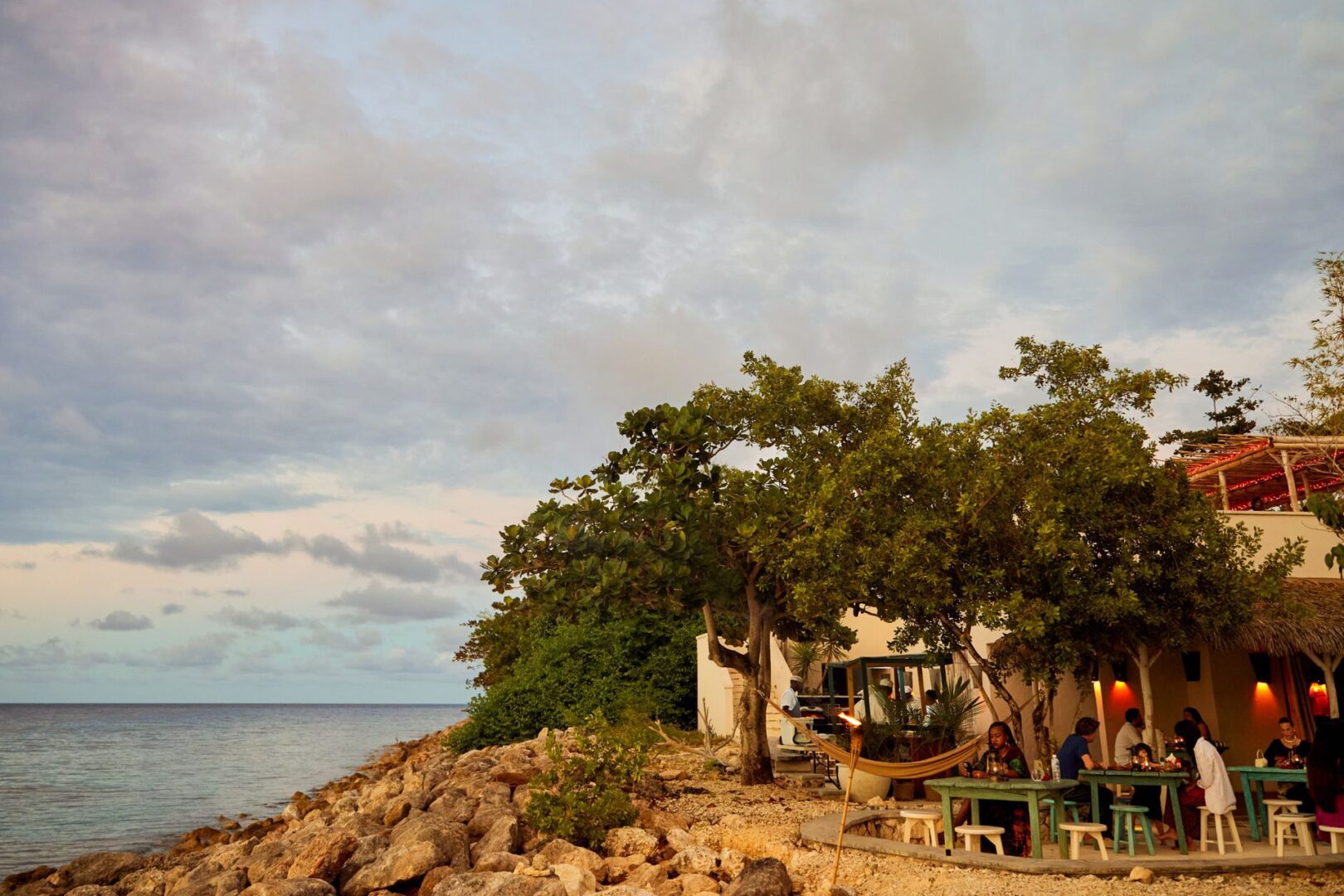
GoldenEye resort’s bar, Shabeen. Image courtesy of GoldenEye.
Villa Feltrinelli’s Markus Odermatt often tells curious guests the story of a day in 2003 when someone appeared at the gates and asked to be let inside, claiming to be a former resident. The gentleman, then in his 70s, explained that he had lived in the villa from 1943 to 1945. He recalled playing the piano with his father in the house and longed for the chance to walk through the rooms again, to recapture the spirit of those days and, if the piano remained, to play once more. “I was thinking, it’s a joke,” Odermatt says. “He walked around the villa very, very quietly, perhaps lost in memories of his father. When he saw the piano, he sat down and began to play.” It was then that Odermatt could confirm that the man was indeed who he said he was. “When he started playing, all my guests were looking up and saying, ‘Wow, who is that?’ I told them, ‘That’s Mussolini’s son.’ ” An accomplished jazz pianist who performed with the likes of Chet Baker and Dizzy Gillespie, Romano Mussolini was also married for a time to Maria Scicolone, the younger sister of Sophia Loren. Not long after his visit, Odermatt was informed that he had passed away. “It felt like a final wish,” Odermatt says.
Their intrinsic privacy, intimacy and discretion have made properties like this magnets for many of today’s stars looking for holiday time away from prying eyes. “One of the reasons the GoldenEye Villa is so popular is that it is a haven of privacy,” says Marika Kessler, the CEO of Island Outpost, the company that runs the villa, and the partner of Chris Blackwell, the founder of Island Records and Bob Marley’s longtime friend and producer. The sentiment is echoed by both Conran and Odermatt, who count Julia Roberts, Hugh Grant, Kate Moss, Adrien Brody, Kristin Scott Thomas, Gillian Anderson, Jerry Hall and Sting and Trudie Styler among their guests — although whether any famous songs were penned during their stay at Villa Mabrouka is unknown. “It’s very, very private, but in a very not-uptight way,” Conran says. “You’re very protected there.”
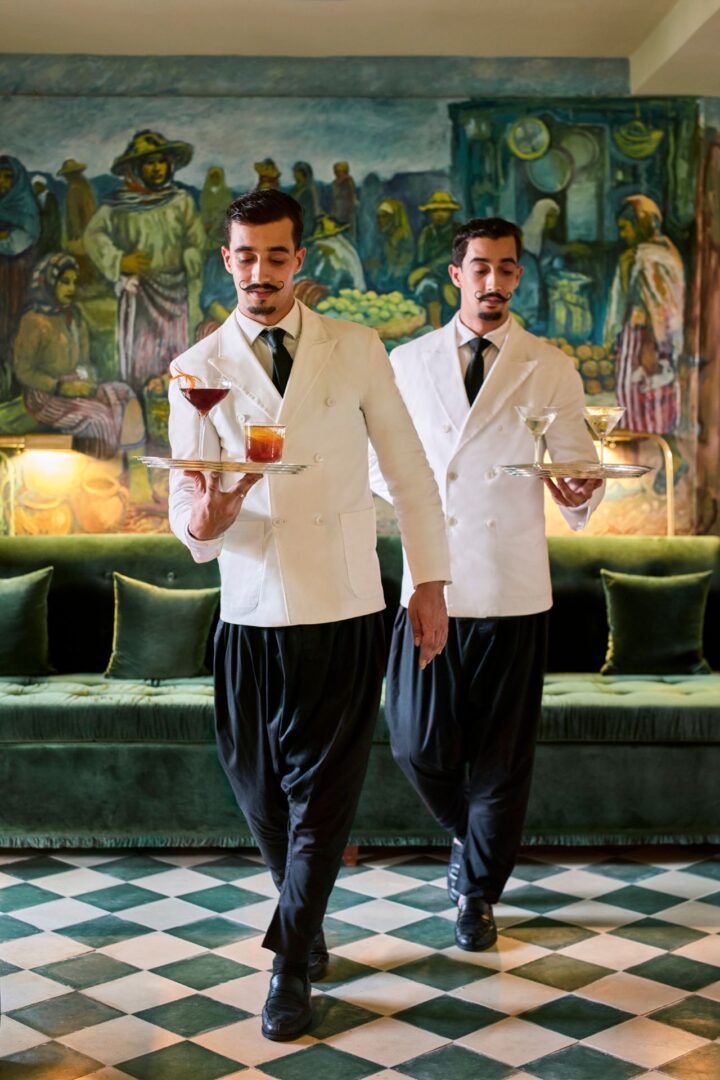
At Villa Mabrouka’s Jake’s Bar, even the waiters have embraced 1930s style. Image: Andrew Montgomery.
But name-dropping can only take you so far. The real magic of these places is what drew their former residents in the first place. “The thing about it,” says Conran, “is that you’re talking about people who, in Yves and Pierre’s case, could have any house anywhere in the world. They could have lived wherever they liked, and they chose this place, and that was for a reason. It’s because it is this incredible place. I mean, fundamentally, that’s how it cuts.”
This story originally appears in the December/ January ’25/ ’26 issue of T Australia, available on newsstands now.